People leadership skills that turn good managers into great leaders.
What Your Managers Will Get


- Strongest: Relationship, many team members seem to trust and lean on each other
- Needs the Most Work: Resources, some employees may feel they lack the tools or support to do their job well
- Engagement Focus: Recognition may be one of the fastest levers available right now
- Some newer team members may feel overlooked in team-wide praise
- High performers may get general thanks, but rarely specific feedback
- Remote team members may feel somewhat less seen than in-office staff
- The team may respond well to specific, public recognition
- The weekly huddle could be a natural moment to highlight wins
- 1:1s already happen consistently and may just need sharper questions
- Consider publicly recognizing one team member's specific contribution this week
- Consider identifying one resource gap and working to close it
- Consider asking each direct report what's working well for them
Goal: 100 points.
- I've been thanking the team as a group. I've never once said her name.
- I assumed everyone knew their work mattered. Nobody's actually told them.
- I ask about deadlines constantly. I never ask how someone's doing.
- Thank Maria by name in the team huddle this Friday.
- Ask one non-assuming question in every 1:1 this month.
- Give one specific, public callout each week through the quarter.
- No friends added yet. Use the button next to Aha! to add one.
Tutorial
More than half of employees who left a job in the past six months said they didn't feel valued by their organization (54%) or their manager (52%).— McKinsey
Respect isn't a poster on the wall. It's built or broken in passing moments: tone, timing, follow-through, who gets interrupted, who gets defended. When it's missing, people don't quit loudly. They quietly stop offering their best thinking and start looking for the exit.
Cost
Personal
Spots
Changes
Role
When employees don't feel valued, teams become purely transactional. Loyalty suffers, which erodes reputation, which complicates talent acquisition, which diminishes productivity, which crushes morale, which fuels disengagement, which increases turnover. It's not one loss. It's a chain reaction, and managers are usually first in line to take the blame and cover the cost.
No one works for your company. Beneath the vision and values, every employee is making decisions based on their own trajectory, growth, and security. That's not selfish, it's human. Even senior leaders operate this way: the average S&P 500 C-suite tenure is 5.2 years, and roughly 85% of those who leave do so on their own terms.
Respect isn't experienced the same way by everyone. Personality, tenure, work style, and even accent or vocabulary can get quietly misread as a lack of competence. These can be common blind spots for otherwise well-intentioned managers. Most leaders never intend to devalue anyone, but intent doesn't cancel impact.
When respect is present, people stop bracing and start contributing freely. You get access to their best thinking instead of just their safest ideas — the half-formed and risky but redeemable ones that actually move work forward. You hear problems earlier and get the truth before it turns into fallout.
Respect is rarely a grand gesture. It's tone, timing, and follow-through. You answer "Am I valued?" every time you give feedback without humiliation, explain the why and not just the what, or treat people as adults instead of problems.
Tutorial
The 5Q Model
This training teaches managers to see what lies beneath the surface, address it directly, and remove the barriers that hold their teams back from doing their best work.
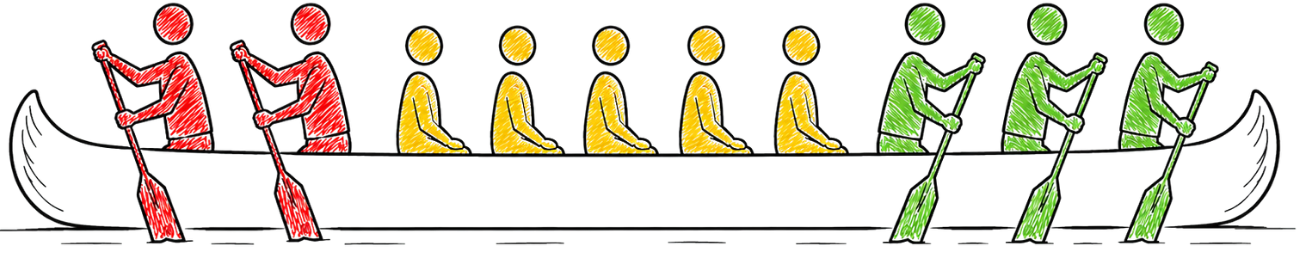
Most companies look like this. According to Gallup's most recent data, roughly 3 in 10 employees are highly engaged (31%), 5 are along for the ride (52%), and 2 are actively disengaged (17%). 5Q training asks and answers one question: how do managers move every employee one seat forward?